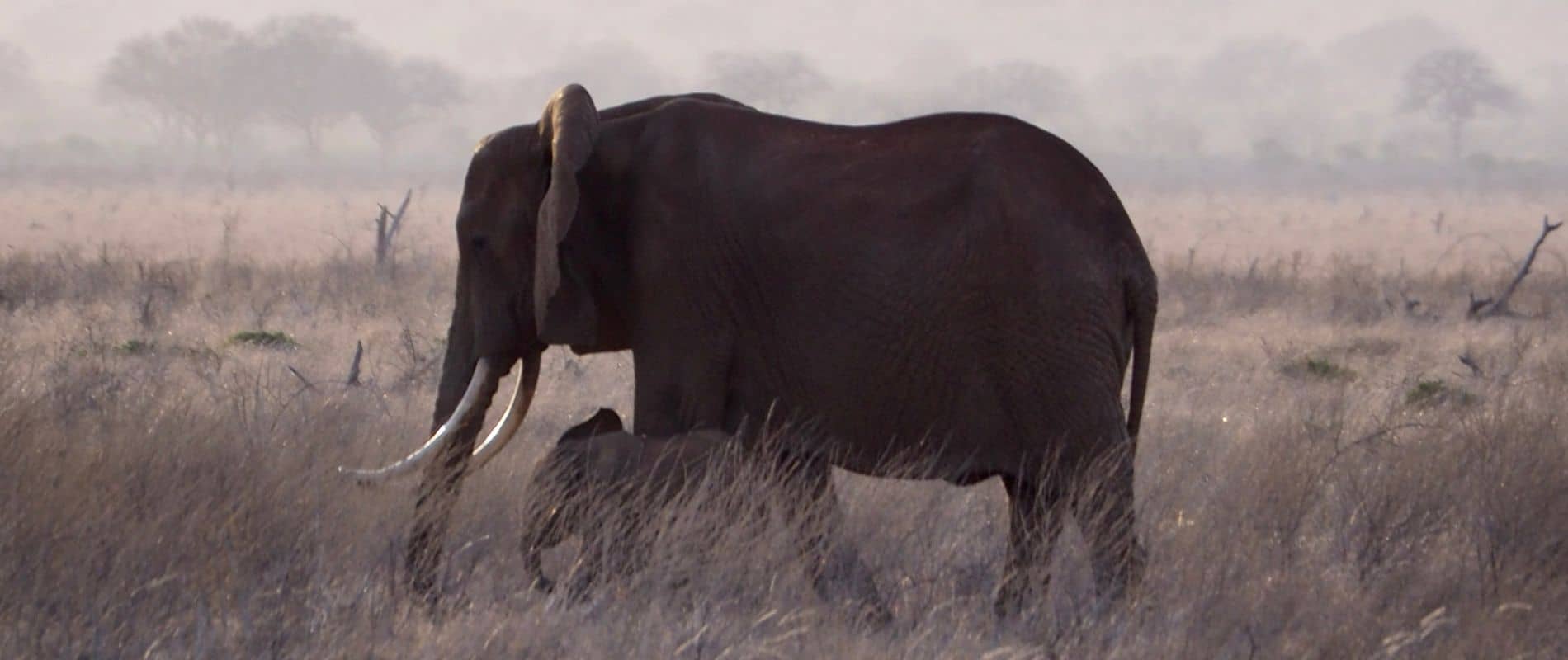
Popularly known as the gentle giants, the African elephants are one of the most unmissable components of any big five African safari tour. Elephants are one of the most fascinating African mammals to watch on any African safari. But nothing can prepare you for the first close-up encounter with an elephant. You’ll hear them before you see them. The ground will rumble as they approach, led by the lead female, shortly followed by the rest of the herd. You’ll be overwhelmed by the elephant’s size (believe me, they’re bigger than you imagine!) and beauty. You’ll be left in awe as they move almost gracefully across the plains.
Now you definitely want to meet an elephant, don’t you? We’ve got some interesting facts about the African elephant that will pique your curiosity.
What is the African elephant?
The African elephant is the largest and heaviest land mammal on earth—we were not kidding about how big they are. It can weigh up to 6 tonnes and eats copious amounts of food each day.
There are two species of the African elephant – the African bush elephant and the African forest elephant (much smaller in size).
It would be pretty hard to miss an African elephant in the wild, given its distinguishing features such as the dexterous trunk, large ears and elongated incisors in the form of tusks. They have grey skin that can be either white or dark after a refreshing bath.
The most captivating feature of this big 5-member has got to be its trunk, which is an elongation of the upper lip and nose. The trunk comes in handy when picking up objects and food from the ground and into the mouth. Unfortunately, poachers have a great liking for the elephants’ tusks making ivory poaching one of the biggest threats to this iconic species.
The dumbo-like ears—when flapped, cool down the elephant by circulating air around the large blood vessels of the inner ears.
Though gentle in nature, bull elephants and mothers with young ones can be dangerous. So keep your distance from them. If you see an elephant flapping its ears, kicking up dust, and/or trumpeting, it’s probably about to charge, so get out of its way.
Diet
The African elephants are herbivores (hello, vegetarians!). They eat up to 160kg per day. Their meals are made up of savannah grasses, bushes, small plants, fruit, twigs, tree bark, and roots. Elephants leave quite a bit of damage to their surroundings after feeding as they use their tusks to tear off branches from trees. The elephants supplement their diets with calcium from mineral licks and mineral-rich waterholes.
Habitat
African elephants are adaptable animals and can survive in many habitats, from lush wetlands to arid African deserts. The bush elephant is relatively widely dispersed (it’s more likely to spot during an African wildlife safari), but the forest elephant is found only in Central Africa.
Behaviour
African elephants live in matriarchal family units led by an older elephant. A herd will often be made up of adult elephants with their daughters and sub-adult sons. As soon as a male elephant reaches puberty (now a bull elephant), he leaves the family group and may join a group of other bachelors.
When a female elephant (cow) is ready to mate, it makes loud calls to attract nearby bulls. The bulls compete fiercely with each other to gain access to the cow. A cow starts reproducing at 10 years but are at their most fertile between 25 and 45. The gestation period of elephants is about 22 months which means they can only give birth a couple of times during their lifetime. Mothers in a herd take care of all calves (even those they didn’t give birth to)—a system known as allomothering.
African elephants communicate with each other using low-frequency infrasonic calls below the threshold of human hearing. They can detect sounds and vibrations through the ground using their feet.
Best places to see African elphants
Game drives are a great way of seeing African elephants in their natural, wild environment. Elephants can be found across Africa. Out of all the safari parks in Africa, Amboseli National Park in Kenya is the best for getting up close to elephants. You can also catch them at Serengeti National Park, Tanzania and Chobe National Park, Botswana.
Fun African elephant facts
-
The elephant’s trunk can lift objects up to 3% of its body weight.
-
Elephants use their trunks as snorkels when crossing deep rivers.
-
A tusk can weigh between 23 and 45 kg and grow up to 2.4 m long.
-
African elephants eventually lose all of their molars. As a result, many die from starvation.
-
An elephant’s brain is quite large and complex and has as many neurons as the human brain.
-
Elephants are smart, emotional, self-aware and highly social creatures
-
Elephants have an incredible memory. Lead elephants will remember the trails and watering holes from knowledge handed down by their ancestors for generations.
-
The ears of an African Elephant can reach up to 5 feet long.
-
Elephants are slow-moving creatures and will walk at the pace of their slowest member.
-
When walking, elephants surround infants and their young babies to protect them from the elements, like the wind, rain and sun.
-
Elephants can recognize themselves in a mirror—something only a few animals can do.
-
Elephant family members show signs of grief and may revisit the bones of the deceased for years.
-
Elephants take mud baths to protect themselves from the sun and clean their skin of bugs and ticks.
Ready to confirm just how big the African Elephant is in person? Book one of our Kenya safaris, and we’ll take you on one of the best safaris in Africa and see numerous herds of elephants!